A levy on tuition fees paid by international students is “wrong”, will “hurt the sector” and is “not in the long-term interests” of the UK, according to the vice-chancellor of one of the country’s leading universities.
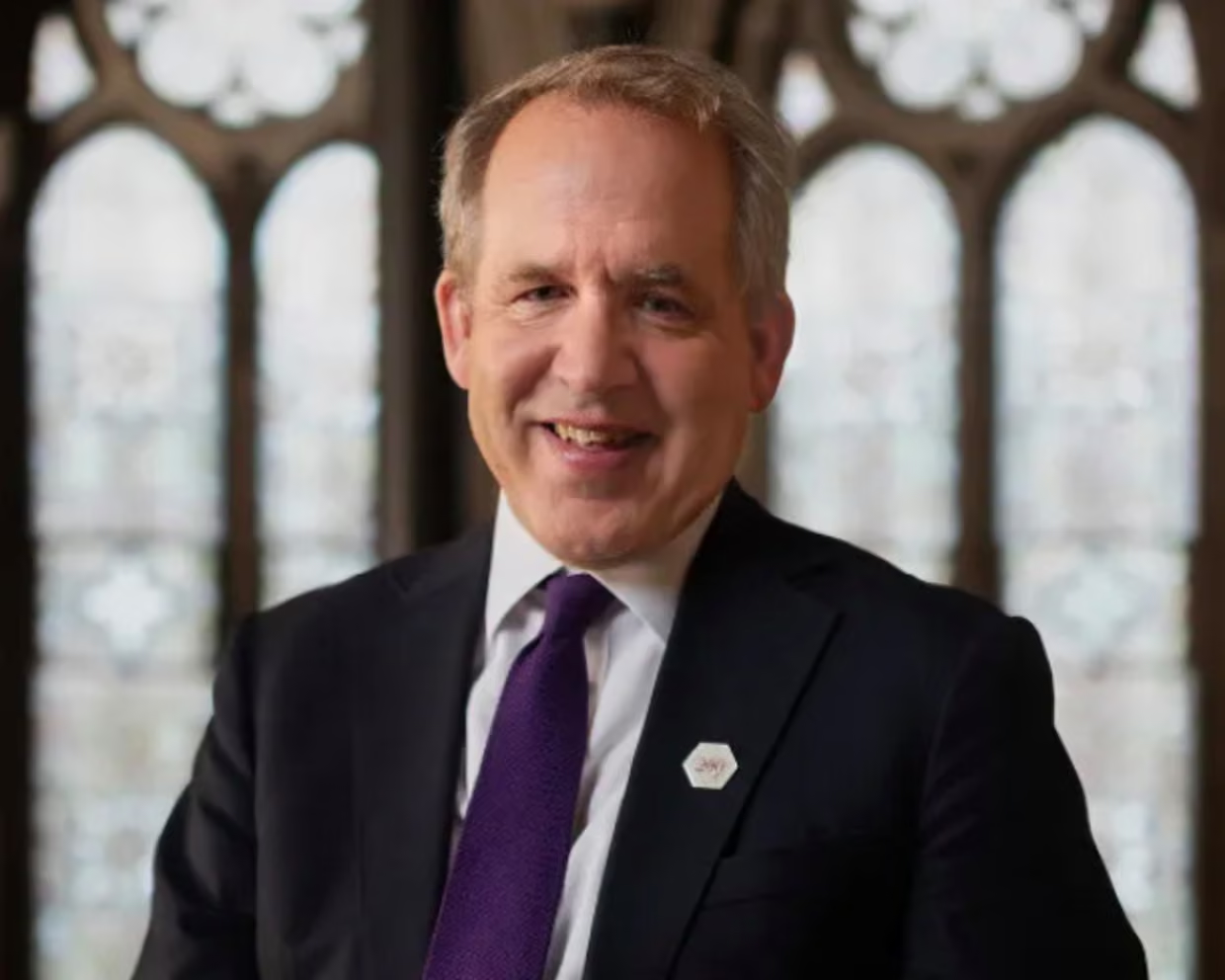
Duncan Ivison, who took over as president and vice-chancellor of the University of Manchester (UoM) last year, was speaking ahead of the budget later this month when the chancellor, Rachel Reeves, is expected to flesh out her plans for the proposed 6% surcharge.
A higher education veteran who has held leadership roles in Australia and Canada, Ivison said the UK has a golden opportunity to become the global destination for international students, at a time when there is a cap on overseas students in Canada and US universities are under attack from the Trump administration.
“Higher education is something the UK does really, really well. That’s why I came to Manchester. It is a kind of jewel in the crown,” he said.
“We have a chance to really become a global destination for the best and the brightest. Now we still can do that, but things like the levy don’t help and that’s frustrating for me, more than anything else.”
Ivison, who joined Manchester from the University of Sydney, welcomed the government’s commitment to increase tuition fees for domestic students in line with inflation: “I know our students would prefer it didn’t happen, but I think in the longer run it’s better for everyone.”
But he urged ministers to reconsider the levy: “I think the international student levy is the wrong policy to implement. I think it will hurt the sector. I think it’s not in the long term interests of the UK either.”
Analysts have suggested that if a 6% levy is introduced it would cost universities in England more than £600m a year, with leading institutions such as the UoM particularly hit.
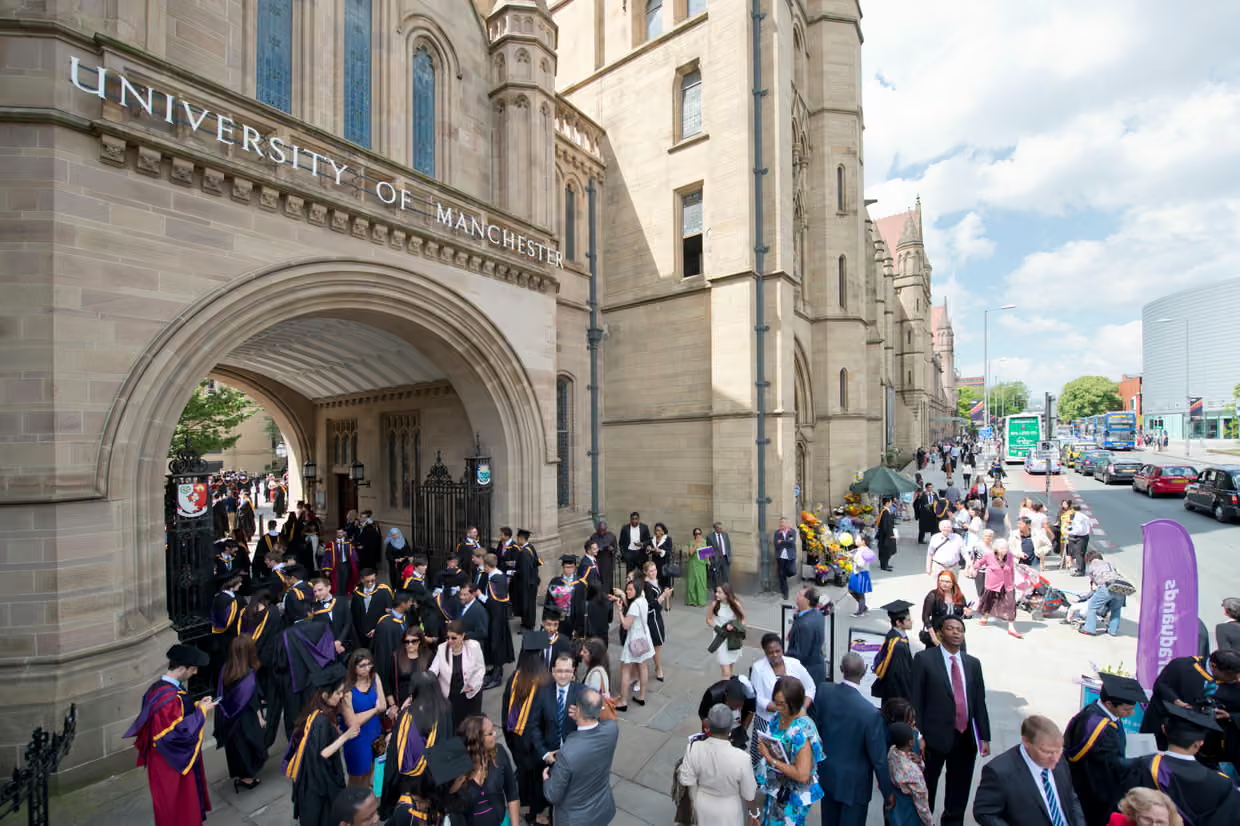
Manchester has one of the biggest cohorts of international students in the country, with 10,000 enrolling from more than 160 countries. Chinese students are the largest group, constituting one in five of all students at the university.
The government has said the proceeds from the levy will pay for the return of maintenance grants for poorer students.
“I fully support the return of maintenance grants but I think there are better ways to fund improving support for students, especially our most disadvantaged students,” Ivison said.
“It’s going to cause financial pain for all of us. We don’t know exactly how it’s going to be implemented, but it could potentially cost us £20-30m a year. We cannot simply pass on a 6% levy, if it is indeed a 6% levy, to our international students. We can’t do that. We don’t think the market will bear it.
“We would have to find ways to absorb that cost from our existing balance sheet so that’s tough at a time when so many universities are struggling. We’re in a solid financial position but we’re exposed to the headwinds. Imagine that for an institution that’s in a less robust financial condition. That’s really tough.”
The UK higher education sector is facing severe financial difficulties, resulting in mass redundancies and sweeping cuts to courses at many institutions.
Universities have relied on international students paying higher fees to make up for deficits from teaching UK students, whose tuition fees have been eroded by inflation, but recent immigration and visa changes have triggered a fall in international recruitment since 2023.
This week the UoM launched a £400m fundraising appeal to help build future resilience. “We’re in a very solid position but we’re not immune from the forces that are wreaking havoc in the sector,” said Ivison.
“We think philanthropy needs to be a big part of our future. It gives you a bit of independence from the state. It allows you to do things you wouldn’t otherwise be able to do, so it’s a really important part of our thinking about future resilience and enabling us to do the transformative things we want to do.”