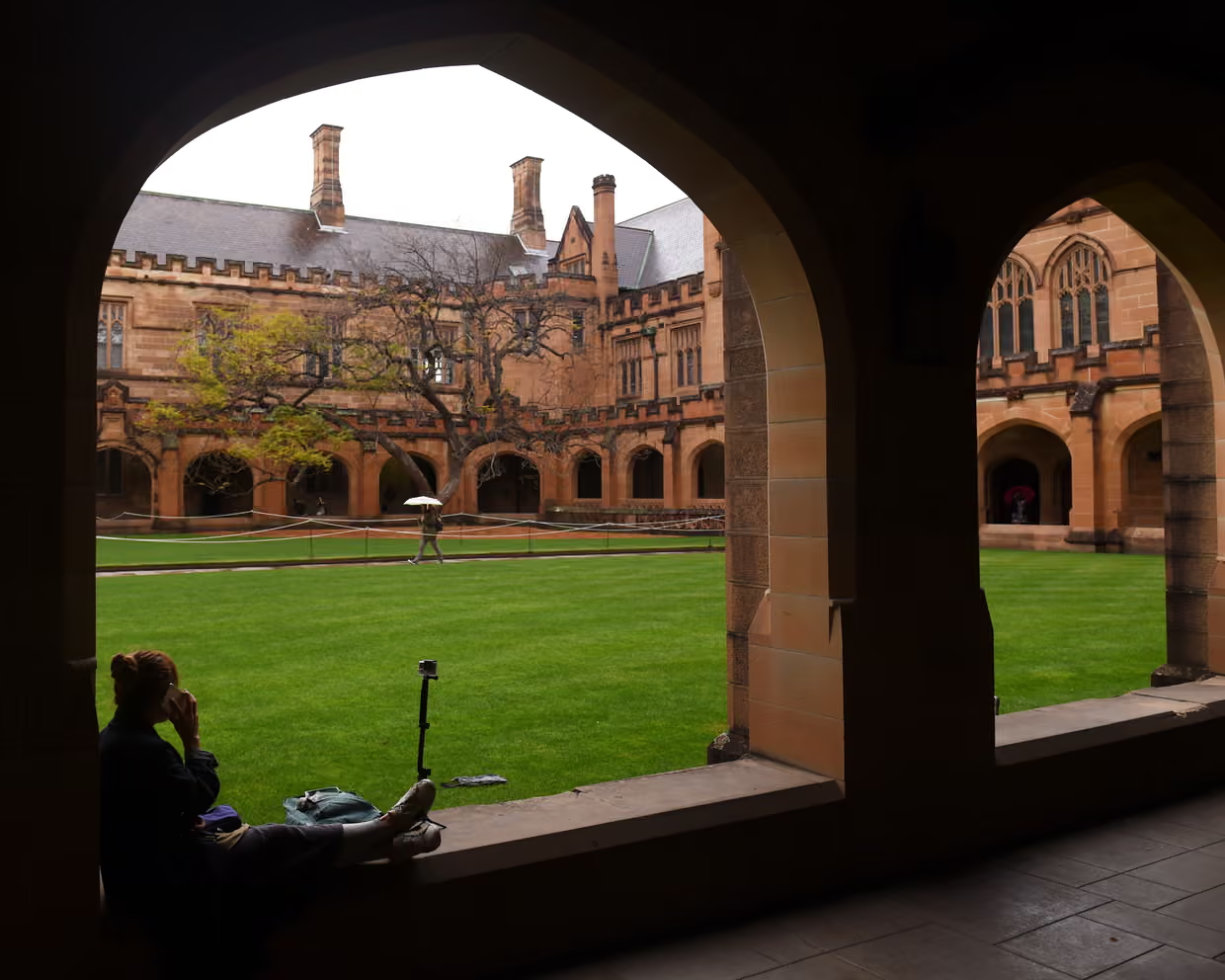
The University of Sydney will not be able to increase its international student enrolments next year under the government’s allocations for 2026, the federal government has revealed.
Meanwhile, overall visa applications are down 26% this year compared with last year.
The federal government has allocated universities 295,000 places for new international student enrolments next year, after its bid to cap new student places to 270,000 failed in parliament last year.
The University of Sydney will continue to have the highest international student intake in the country with 11,900 enrolments, despite not receiving any additional places, according to the announcement on Tuesday.
Of the 32 universities which sought new students, it was the only institution not to be granted extra places, due to not having “realistic plans” for diversifying its international student cohort, a lack of “genuine commitment” to south-east Asian engagement and a lack of “evidence of appropriate investment in new housing”. Just five universities did not seek additional places.
Engaging with south-east Asia is in Australia’s national interest, and the 2026 international student allocations recognise universities which are demonstrating genuine focus on our region,” the assistant minister for international education, Julian Hill, said.
The University of Sydney vice-president Kirsten Andrews said her institution was committed to “building a more diverse” student community, in a statement provided to Guardian Australia.
While the majority of overseas enrolments still come from China, the university has seen an increase in students in recent years from India, Malaysia, Vietnam, Pakistan and Africa.
“We’re continuing our discussions with the government as we seek to increase the diversity of our student mix over time,” Andrews said.
Both Labor and the Coalition were accused of politicising international student enrolments during the election campaign, and blaming the cohort for increasing housing pressures in major cities.
The impact of students on housing shortages has been disputed, and some studies have shown no correlation between an increase in the number of international students and the increase in rents.
The government has said universities that are building more student accommodation have received increases to their international student allocations.
“Australians expect to see growth in student numbers supported by investment in new housing, which is what the government’s policies now incentivise,” Hill said.
Monash University in Melbourne has been allocated the second highest number of places at 11,300, while regional institutions – Charles Sturt University, Federation University, the University of Newcastle and Charles Darwin University – have secured the largest percentage increases in their allocations.
Major universities in Sydney and Melbourne will still attract the highest number of international students, with the University of Melbourne and University of New South Wales each allocated more than 10,000 places.
Despite the failure to pass legislation implementing an enrolment cap, the government has said student visa applications have dropped, and the 2026 national planning level – or number of international students education providers can enrol – remains 8% below the immediate post-Covid peak.
The education minister, Jason Clare, introduced legislation to strengthen the integrity of the international education sector on 9 October. The bill inserts a new definition of an education agency, and strengthens tests for providers to crack down on unscrupulous operators.
“International education is a target for unscrupulous individuals trying to make a quick buck,” Clare said in a statement on Tuesday.
“That’s why we introduced legislation to parliament last week to crack down on dodgy operators and practices.”