UK’s new digital-only immigration system creating exclusion and fear, study finds
Obtaining an eVisa to prove their status or right to legally reside in Britain is causing migrants high levels of stress
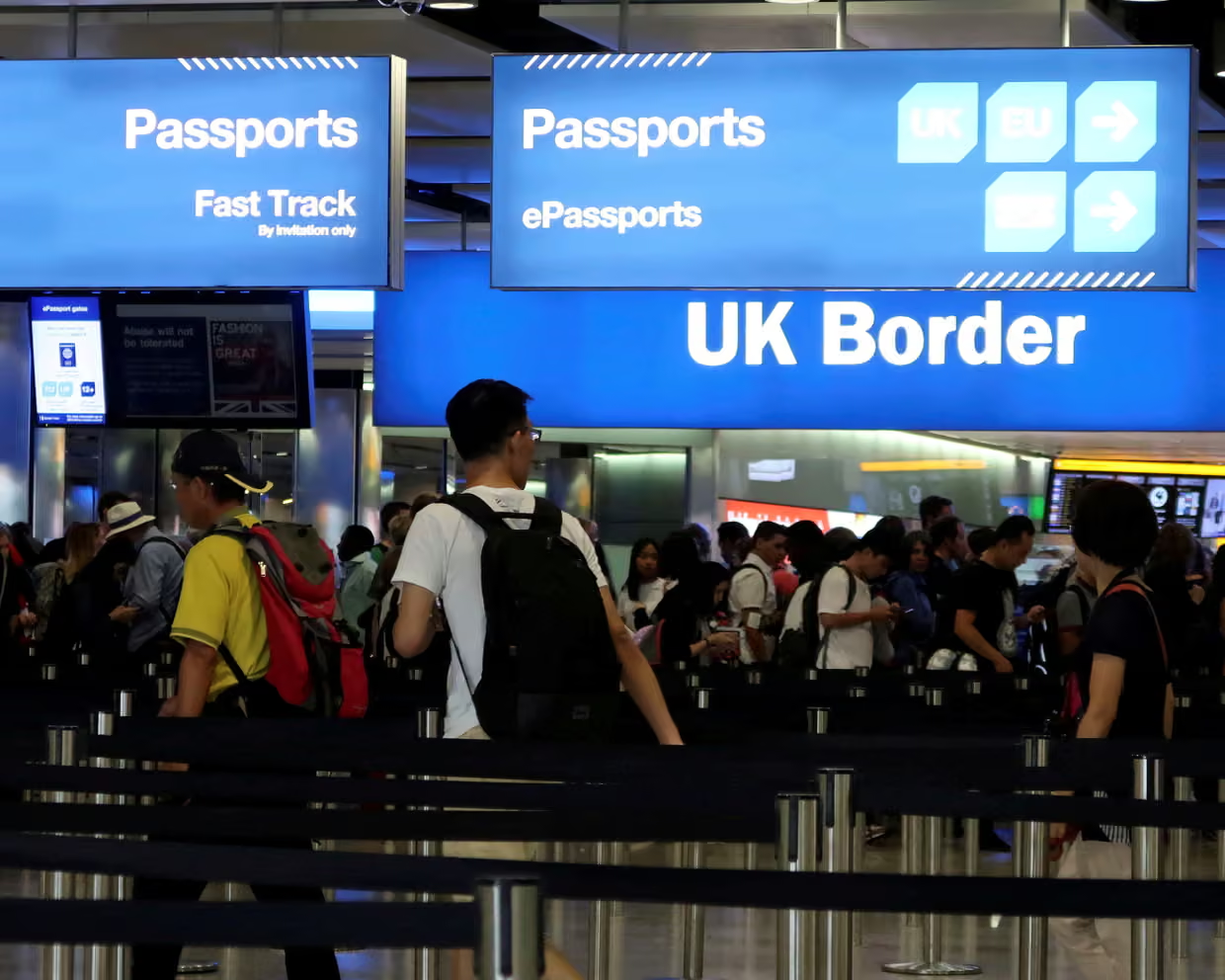
The UK’s new digital-only immigration system is creating stress, fear and exclusion for immigrants who rely on their status, a new report has found.
The digitalisation of immigration status began in 2018 and in the middle of this year the government set out that nearly all migrants entering or legally residing in the UK would have to obtain an eVisa to prove their rights. This would make them the first migrants to experience a mandatory digital-only identification system.
But, according to the study by Migrant Voice and the University of Warwick, the new system has caused people to experience high levels of stress while trying to digitalise their immigration status within tight deadlines. The researchers spoke with 40 migrants, many of whom said they feared not being able to prove their legal status digitally and losing their rights if something went wrong in the digital portal.
One said: “I don’t trust the system, especially because of what Windrush showed us that trusting the government for migration archives is not very trustful. There were already situations of Europeans applying that were completely vanished from the system … If it happens to one, why not them, not me.”
People said they faced errors, shifting deadlines, and technical failures that affected their ability to work, travel, rent, study, and access public services. Many reported feeling vulnerable and anxious when attempting to correct mistakes they did not cause.
Employers, landlords, airline staff, and border officials often lacked understanding of digital immigration checks, leading to delays and confusion. Some people reported being asked to explain the system themselves.
Many participants complained about the overly complex processes, language barriers, technical glitches, and problems with generating a “share code” which is needed to prove their right to work or rent a home. Even when trying to retrieve clear instructions from the Home Office via email or helpline, many were left unsure of what to do.
Migrants with limited digital literacy, language barriers and disabilities are at high risk of becoming excluded from the process, the study said. Those who were able to understand English felt it was unfair that the system wasn’t translated into other languages. Instead they relied on friends, community organisations and migrant-led online platforms to understand the set up.
Dr Derya Ozkul from the University of Warwick said: “In our research, we heard from individuals losing employment opportunities, missing flights, having their personal information shared with others, struggling to complete processes due to technical issues, and worrying that they had lost their legal status.
“This report should serve as a warning to everyone about what can go wrong when systems are made compulsory and digital-only, without offering any alternatives.”
Share on:
Recent Articles
Recent Articles

Canada: Higher Financial Requirements for Study Permit Applicants in Quebec
Canada: Higher Financial Requirements for Study Permit Applicants in Quebec Effective January 1, 2026, Quebec will significantly increase the minimum financial support requirements for study permit applicants, with some thresholds

2026 provincial and territorial allocations under the international student cap
2026 provincial and territorial allocations under the international student cap Ottawa, November 25, 2025 — The international student cap limits the number of study permit applications that Immigration, Refugees and Citizenship

Canada imposes 50% cut in new study permits for 2026
Canada imposes 50% cut in new study permits for 2026 Canada will issue a maximum of 408,000 study permits next year, a 7% decrease from this year, with the number

All the higher education-relevant Home Office stats for Q3 2025
All the higher education-relevant Home Office stats for Q3 2025 There’s new migration data out for July to September, covering student visas, dependants, graduate route, global talent, asylum claims, and

New Primary and Temporary worker sponsor guidance
New Primary and Temporary worker sponsor guidance On 11 November 2025, the UK Home Office issued updated versions of three Primary Worker and Temporary Worker sponsor guidance documents. These updates

England’s universities face £330m loss under new £925-per-international-student levy
England’s universities face £330m loss under new £925-per-international-student levy The UK government has set out plans for a £925 charge per international student from 2028, with its official modelling indicating