

A curb on the number of international students at five universities in the Randstad will have negative consequences for the Dutch economy. Gross domestic product will decline by approximately €4 to €5 billion, according to a study commissioned by Leiden University, Utrecht University, the University of Amsterdam, Vrije Universiteit Amsterdam, and Erasmus University Rotterdam.
Regions, businesses, and society as a whole will feel the significant, negative economic effects, the Universities say. They commissioned SEO Economic Research to study the matter. Limiting the influx of international students will directly save the government tens of millions of euros. However, this effect is massively offset by the economic damage, the researchers concluded, FD reported.
SEO investigated what would happen if the universities largely cut courses taught in English, combined with a limit on how many students can enroll in the remaining English-taught courses. According to the researchers, that would lead to a 75 percent decrease in international bachelor’s students and a 25 percent decrease in master’s students at the five Randstad universities.
Since an increasing proportion of international students remain and work in the Netherlands after their studies, this means less available labor for companies and therefore a loss of revenue and potential tax revenue. This loss is exacerbated because foreign workers also generate additional demand for goods and services.
The sectors that will be hit hardest by the decline in international students are business services (39 percent), financial institutions (20 percent), and the public sector.
The five universities urged political parties to incorporate the research results into the development of a “national talent strategy.” According to the higher education institutions, international students are indispensable in the region and in the Randstad. They help alleviate staff shortages in sectors with high demand for highly educated professionals.
The study was prompted by the “Internationalization in Balance” bill (WIB), the impact of which the universities want to understand. The bill aims to ensure a balance between the advantages and disadvantages of internationalization in higher education. Earlier this year, universities themselves announced measures to limit the influx of international students.
Reporting by ANP and NL Times


Visa Suspension Shock and UK Travel Warnings Spark Fear Amid Iran, Middle East Conflicts
Visa Suspension Shock and UK Travel Warnings Spark Fear Amid Iran, Middle East Conflicts Visa suspension and travel warnings spark concerns across universities and businesses. The United Kingdom has taken

Moving to a digital immigration system
Moving to a digital immigration system UK Visas and Immigration (UKVI) are developing a digital immigration system. This means we are replacing physical documents with a digital record of your
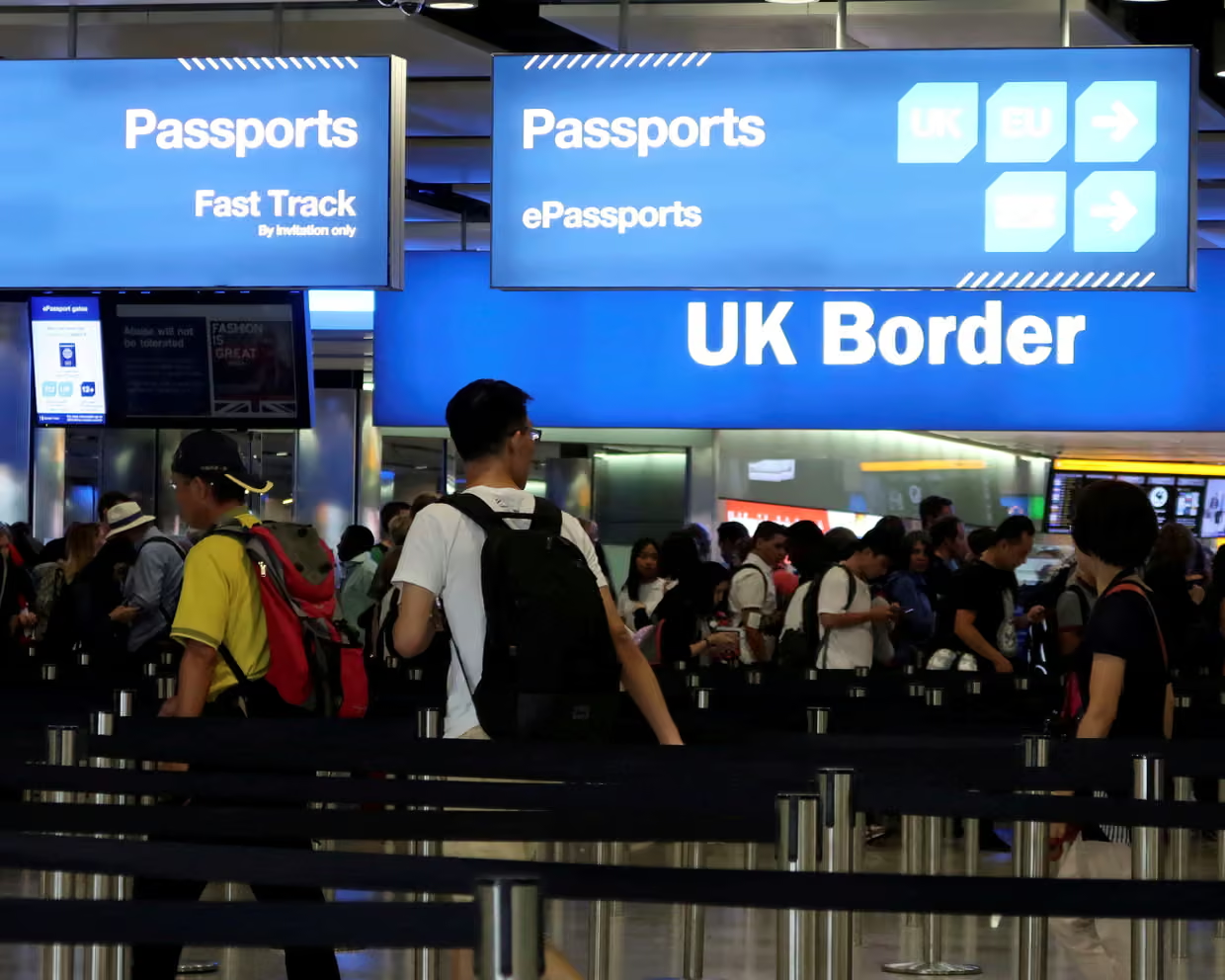
UK migration could be negative this year – how will that hit the economy?
UK migration could be negative this year – how will that hit the economy? Universities, builders and health trusts are feeling the squeeze, as thinktank says effect of zero net

Nine in 10 international students fear for US visa status
Nine in 10 international students fear for US visa status Just 4% of international students recently surveyed said they felt “very or extremely” safe in the US, as shifting visa

UK: Rule changes could be coming for Master of Research programmes
UK: Rule changes could be coming for Master of Research programmes If there is a lesson that international education stakeholders in the Big Four have learned in the past couple

Global higher education enrolments expected to grow through 2035, but new challenges must be addressed
Global higher education enrolments expected to grow through 2035, but new challenges must be addressed Times Higher Education’s new report, Towards 2035: Projecting the Future of Global Higher Education, predicts that university-level