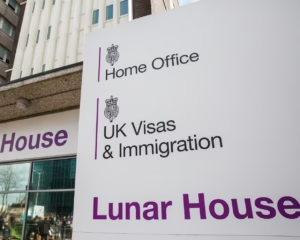
Visa applicants from nationalities most likely to overstay and claim asylum face a Home Office crackdown.
Yvette Cooper, the Home Secretary, is proposing restrictions on students and workers from countries such as Pakistan, Nigeria and Sri Lanka that have high rates of visa applicants who go on to claim asylum once in the UK.
The move follows research by Home Office officials that found migrants who have overstayed their visas account for nearly 40 per cent of all asylum claimants.
Under Labour’s plans to tackle abuses of the system, visas will be rejected for individuals who fit the profile of someone who will go on to claim asylum and is from one of the countries with high rates of asylum claims in the UK.
Some 40,000 foreign nationals who came as overseas students, migrant workers or visitors last year sought asylum, raising concerns that they were exploiting their visas as a backdoor route to permanent residency in the UK.
Visas grant permission to stay in the UK for a set period, often for no more than a year. But by claiming asylum, applicants can remain indefinitely because the Home Office faces huge obstacles to deporting them, including human rights laws.
The proposals come before publication of the Government’s immigration white paper, due next week, that will set out Sir Keir Starmer’s plan for reducing net migration, which fell from a record 906,000 in 2023 to 728,000 last year.
It is understood the visa crackdown will not be part of the white paper but is designed to combat abuses and reduce costs in the asylum system.
Some 10,000 of the 40,000 overstayers who claimed asylum had lived in taxpayer-funded hotels or other state-backed accommodation.
This was despite entering the UK on the basis they would earn enough as workers to live without needing benefits, or as students with enough money to cover their tuition and living costs.
New measures
Ms Cooper is planning to introduce measures to bar migrants who came to the UK on a work or study visa from claiming taxpayer-funded accommodation.
Officials will be instructed to use the bank statements submitted by visa holders as part of their assessment when deciding whether to grant asylum accommodation. This will make it significantly harder for asylum seekers to claim free accommodation if they came to the UK on a visa.
The Home Office data show that of the 40,000 visa overstayers seeking asylum, the biggest proportion – 40 per cent, or 16,000 – had come to the UK on a study visa, including some who had applied for a graduate visa after studying for their first degree in the UK.
Some 29 per cent or 11,500 had a work visa. The standard skilled visa minimum salary is £38,700, while students have to show they have the £25,000 to £35,000 that they need to cover living and tuition costs.
An investigation by the National Audit Office, the spending watchdog, suggested there had been a 100-fold increase in migrants with skilled worker visas claiming asylum in the UK. From only 53 asylum claims in 2022, it had risen to 5,300 in the first 10 months of 2024.
Of those asylum seekers who had originally entered on a visa and were living in asylum hotels or other state-funded accommodation, the most common nationalities were from the Commonwealth countries of Pakistan, Nigeria and Sri Lanka.
The Home Office estimated that more than 25,000 foreign nationals who entered on a visa had been provided with state-funded accommodation between 2022 and 2024.
The 40,000 overstayers outnumbered the 35,000 migrants who crossed the Channel on small boats to claim asylum and some 33,000 further migrants who entered the UK via lorries, planes or other routes.
More than 38,000 migrants were in hotels at the end of December, up 8,000 since Labour came to power, costing the Home Office £5.5 million a day. A further 65,707 are in dispersal accommodation, including private rented houses.
The Home Office has committed to cutting the asylum hotel bill of more than £2 billion a year by £300 million in 2024-25 and £700 million in 2025-26 – and ending the use of hotels by the end of the current parliament.
‘Building intelligence’
Next week’s white paper is also expected to require foreign graduates to leave the UK unless they secure a graduate-level job.
Foreign graduates can currently apply to remain in the UK for two years without having to find a job. There have been more than 200,000 applicants since the graduate visa was launched in 2021.
Bosses who break employment law – for example, by failing to pay their staff the minimum wage – will be banned from hiring workers from abroad.
Training will also be linked to immigration, which means that sectors applying for foreign worker visas must first train Britons to carry out jobs.
A Home Office spokesman said: “To tackle abuse by foreign nationals who arrive on work and study visas and go on to claim asylum, we are building intelligence on the profile of these individuals to identify them earlier and faster.
“We keep the visa system under constant review and where we detect trends, which may undermine our immigration rules, we will not hesitate to take action.”