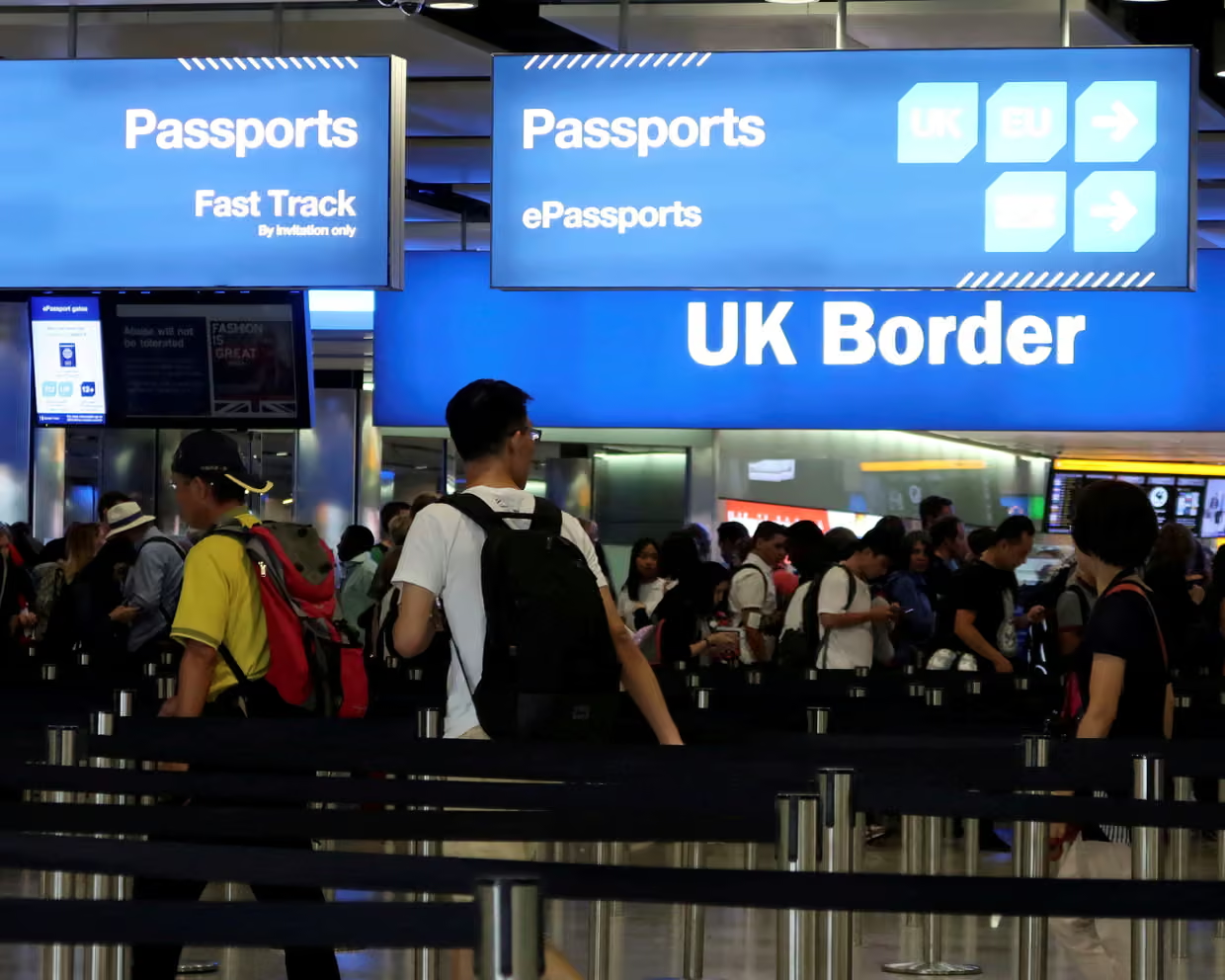
UK visa policy an ‘act of national self-harm’, ministers told as Lords demand review
Britain’s strict new visa rules are an “act of national self-harm” that deter the best people from coming to the country, Ministers were warned on Tuesday.
Talented Masters and PhD students, early-career researchers, scientists and tech experts are choosing not to come to the UK after entry requirements were changed, the House of Lords Science and Technology Committee said.
It has resulted in Britain becoming deprived of vital talent, particularly in fields like AI, peers said as they urged the Government to review visa rules.
Last year the then Conservative Government announced a wave of restrictions on people coming to Britain, and their family members, in a bid to bring down record levels of legal immigration.
The new rules, which were implemented in stages, included a ban on most foreign students bringing family to Britain with them, a rise in costs for employing workers from abroad and an increase in the minimum income threshold needed to come with dependents.
High up-front visa costs and an inflexible immigration system have put the UK at a severe competitive disadvantage that is hitting UK businesses, charities and universities, Lords said.
The Committee heard that Cancer Research UK is bracing for extra visa costs of £700,000 a year, while applications to postgraduate courses taught at Cranfield University, a specialist postgraduate university in Bedford, had dropped 47% in just two years.
Peers called on the Home Office to review the ban on international students bringing family to the UK with them, and for it to consider granting exemptions.
In a letter to the Home Secretary, Chancellor and the Science Minister, chair of the cross-party Lords Science and Technology Committee Baroness Brown of Cambridge, said visa costs had surged by up to 58% and were now more than any comparable country.
The requirement for someone to pay the full Immigration Health Surcharge up-front for the duration of a visa could result in an initial bill running into tens-of-thousands-of-pounds, she said in her letter.
“This is a huge deterrent to postdoctoral researchers,” said Baroness Brown.
“We have had longstanding concerns about the impact of the UK’s immigration system on its ability to attract STEM talent.
“Indeed, it is the Committee’s view that the current policy, which throws up barriers to coming to the UK to work and study for Master’s and PhD students, young researchers, scientists and technology experts early in their careers, is an act of national self-harm.”
She added: “We understand that the Government was elected on a pledge to reduce overall immigration … but the ‘Global Talent’ visa (designed to help exceptional researchers come to the UK) only accounts for around 4,000 people a year.”
A Government spokesperson said: “We are grateful for the incredible work skilled international professionals do in the UK. However, it is clear that we must end reliance on overseas labour and boost economic growth.
“That’s why, under our Plan for Change, we will publish a White Paper to set out a comprehensive plan to restore order to the broken immigration system, as we aim to link our immigration, skills and visa systems to boost the domestic workforce.”
Share on:
Recent Articles
Recent Articles

UK’s new digital-only immigration system creating exclusion and fear, study finds
UK’s new digital-only immigration system creating exclusion and fear, study finds Obtaining an eVisa to prove their status or right to legally reside in Britain is causing migrants high levels

Canada: Higher Financial Requirements for Study Permit Applicants in Quebec
Canada: Higher Financial Requirements for Study Permit Applicants in Quebec Effective January 1, 2026, Quebec will significantly increase the minimum financial support requirements for study permit applicants, with some thresholds

2026 provincial and territorial allocations under the international student cap
2026 provincial and territorial allocations under the international student cap Ottawa, November 25, 2025 — The international student cap limits the number of study permit applications that Immigration, Refugees and Citizenship

Canada imposes 50% cut in new study permits for 2026
Canada imposes 50% cut in new study permits for 2026 Canada will issue a maximum of 408,000 study permits next year, a 7% decrease from this year, with the number

All the higher education-relevant Home Office stats for Q3 2025
All the higher education-relevant Home Office stats for Q3 2025 There’s new migration data out for July to September, covering student visas, dependants, graduate route, global talent, asylum claims, and

New Primary and Temporary worker sponsor guidance
New Primary and Temporary worker sponsor guidance On 11 November 2025, the UK Home Office issued updated versions of three Primary Worker and Temporary Worker sponsor guidance documents. These updates